Underbody Anti-Rust Coating: Types, Cost and How Often to Redo It in Mumbai
Mumbai detailing guide11 min read

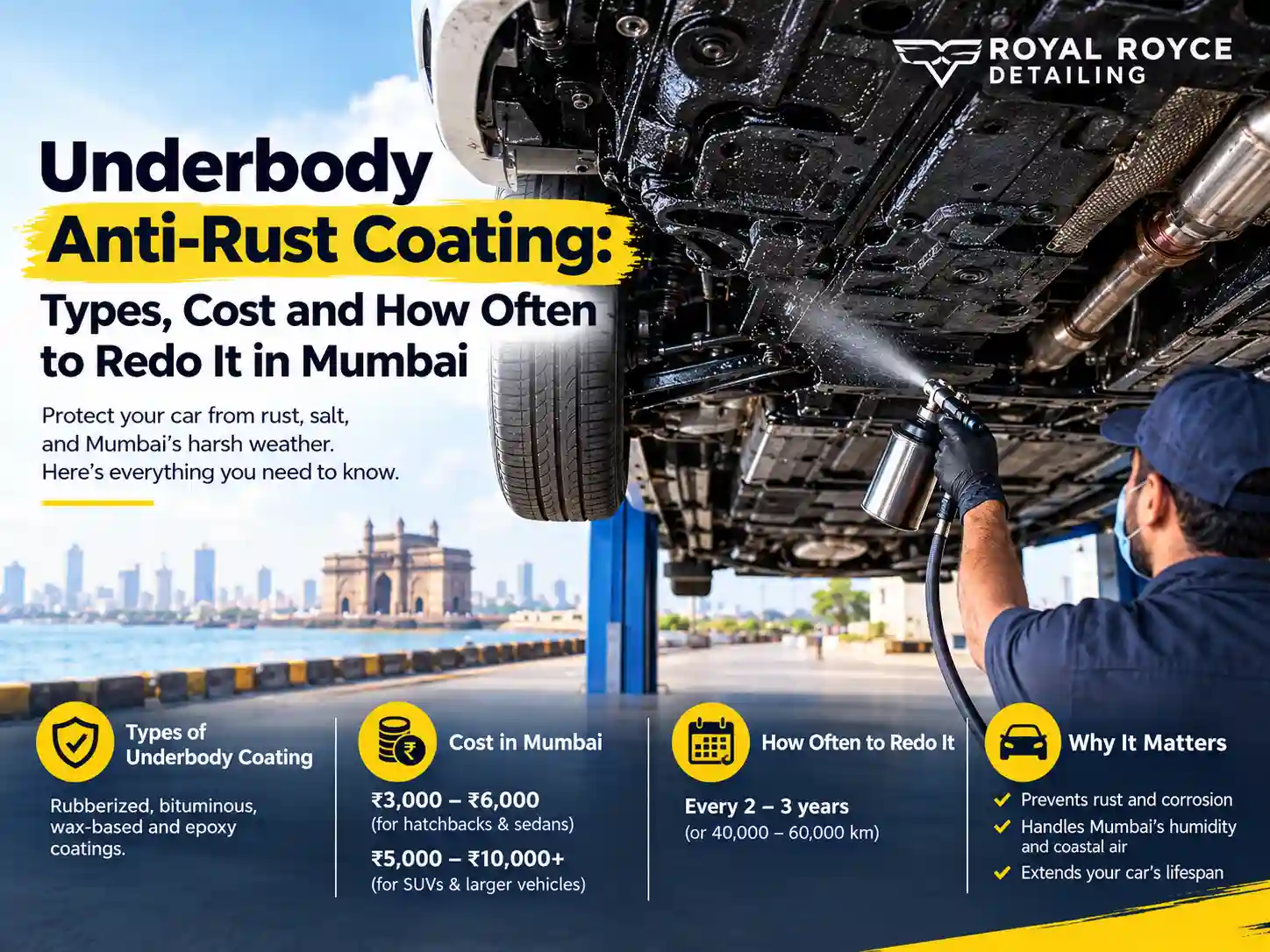
Underbody Anti-Rust Coating: Types, Cost and How Often to Redo It in Mumbai

By Royal Royce Team

Quick answer: For a Mumbai car, underbody anti-rust coating is worth doing, ideally a wax-based or polymer coating applied after a thorough underbody wash and drying. Owners report dealer quotes of about ₹4,500 to ₹6,000. Expect it to last two to three years, inspect it every April before the monsoon, and avoid thick rubberised coats sprayed over dirty or damp metal, which trap moisture.

Mumbai cars rust from the bottom up, and the paint on top tells you nothing. We’ve explained why in our guide to asking about the undercarriage first: salt in the sea air settles in every gap, humidity keeps it wet, and the monsoon adds standing water and road grime. Santacruz averages around 2,500 mm of rain a year, per IMD normals.

This guide is about the next step: the coating itself. What types exist, what they cost, which one suits Mumbai, and how to tell a good job from a bad one.

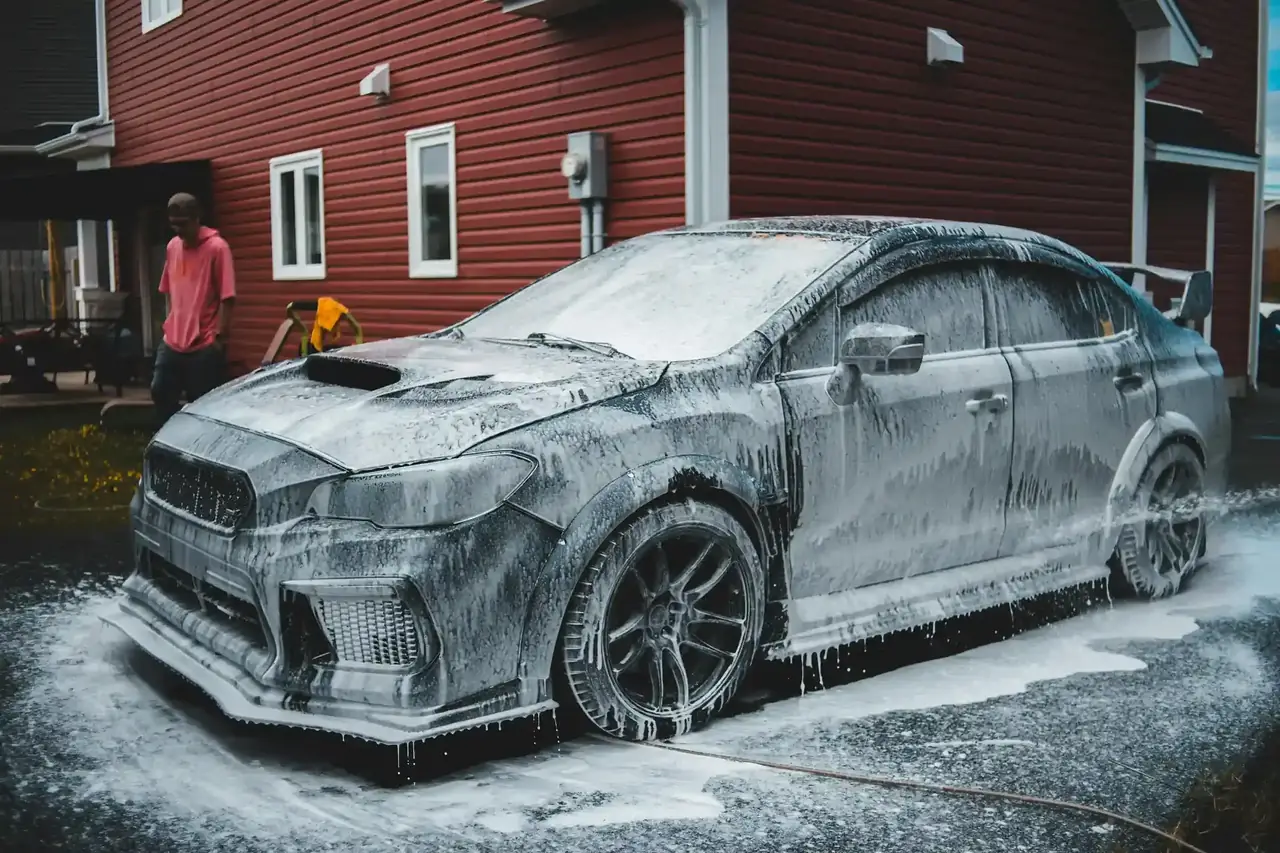
Full car spa service in progress01

Does a new car in Mumbai need anti-rust coating?

Modern cars leave the factory with galvanised panels in critical areas and a factory underbody sealant. Many makers also offer an anti-corrosion warranty, so read yours before paying for anything.

That said, coastal cities are hard on cars. AutoGuide India reports a 2015 IIT Bombay study of more than 500 vehicles in coastal Mumbai, which found visible corrosion on 75% of non-galvanised cars within five years, and none on galvanised ones. And Cars24 notes that moist salt air corrodes bare metal roughly five times faster than dry, salt-free air.

Our view: if you park in the open in a sea-facing area (Worli, Bandra, Juhu, Colaba, Versova), get an extra coating in the first year or two. If you park in a covered basement inland and the car is under warranty, a yearly underbody inspection may be enough until year two or three. Either way, inspect it every year before the monsoon.

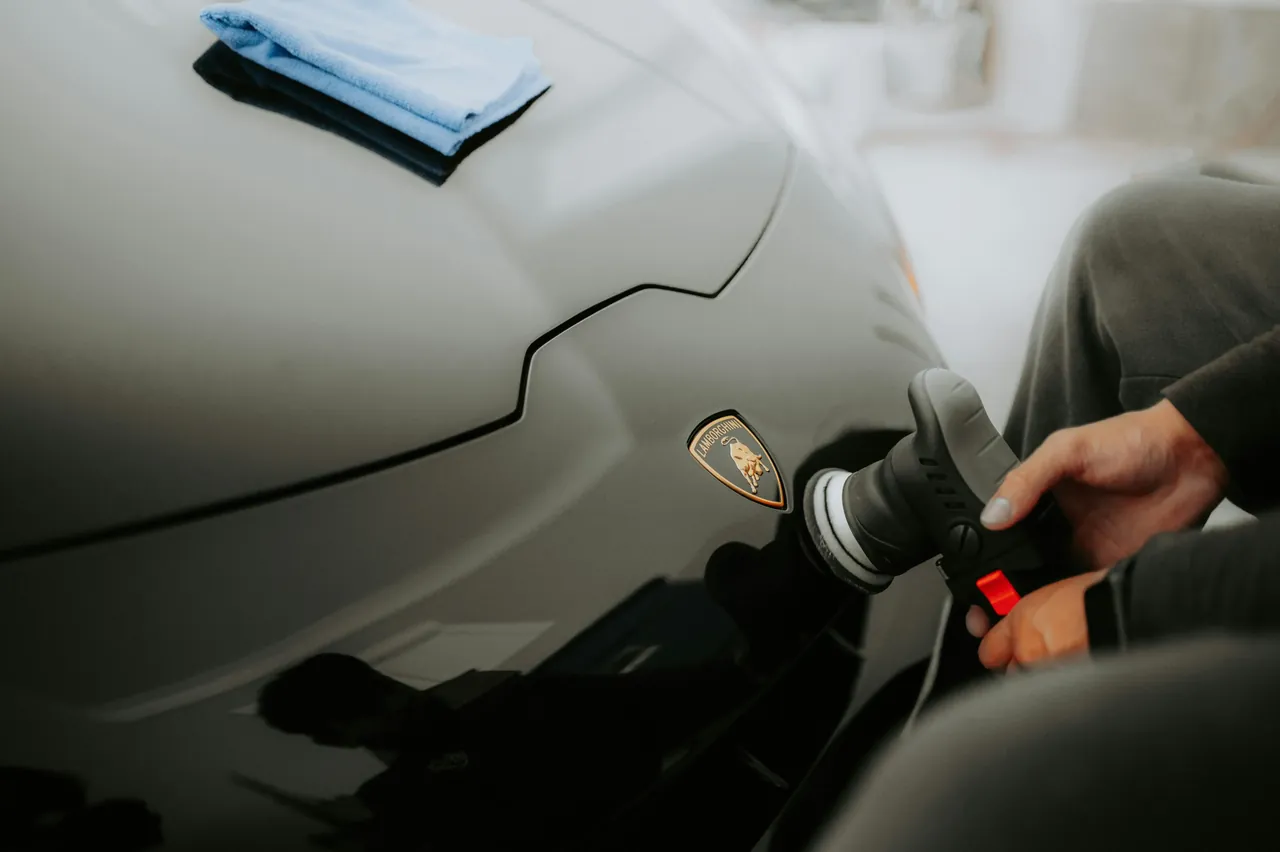
Car detailing service in progress02

Types of underbody anti-rust coating

Type

How it works

Strengths

Weak spots

Typical life

Wax-based or oil-wax

Thin, flexible film that creeps into seams and repels water

Stays flexible, self-seals small chips, can go into cavities

Attracts some dirt; needs topping up

About 2 to 3 years in Mumbai use

Polymer or synthetic

Sprayed resin film

Tougher than wax, cleaner finish

Prep has to be perfect

Varies by product

Rubberised or bitumen

Thick, textured coat

Absorbs stone chips, cuts road noise

Can crack with age and trap moisture if the metal wasn’t clean and dry

Varies; check yearly for cracks

Water-based

Lighter coat

Cheap, low odour

Owners report reapplying every 6 to 12 months

Short

On Team-BHP’s long-running thread on underbody coating, owners repeatedly recommend wax-based coatings for Indian conditions and warn that rubber or tar coats over poorly prepared metal can trap moisture.

Our pick for Mumbai

A wax-based or polymer coating on the underbody and inside the cavities, with a thin rubberised layer only in the wheel arches where stones hit hardest. That mix gives flexibility where water collects and impact resistance where it’s needed.

One thing to avoid entirely: the old trick of spraying used engine oil underneath. It washes off onto the road, makes surfaces slippery for two-wheelers in the rain, and pollutes drains.

Car detailing service in progress

Get a free quote

Get your quote in minutes on WhatsApp.

Get my quote
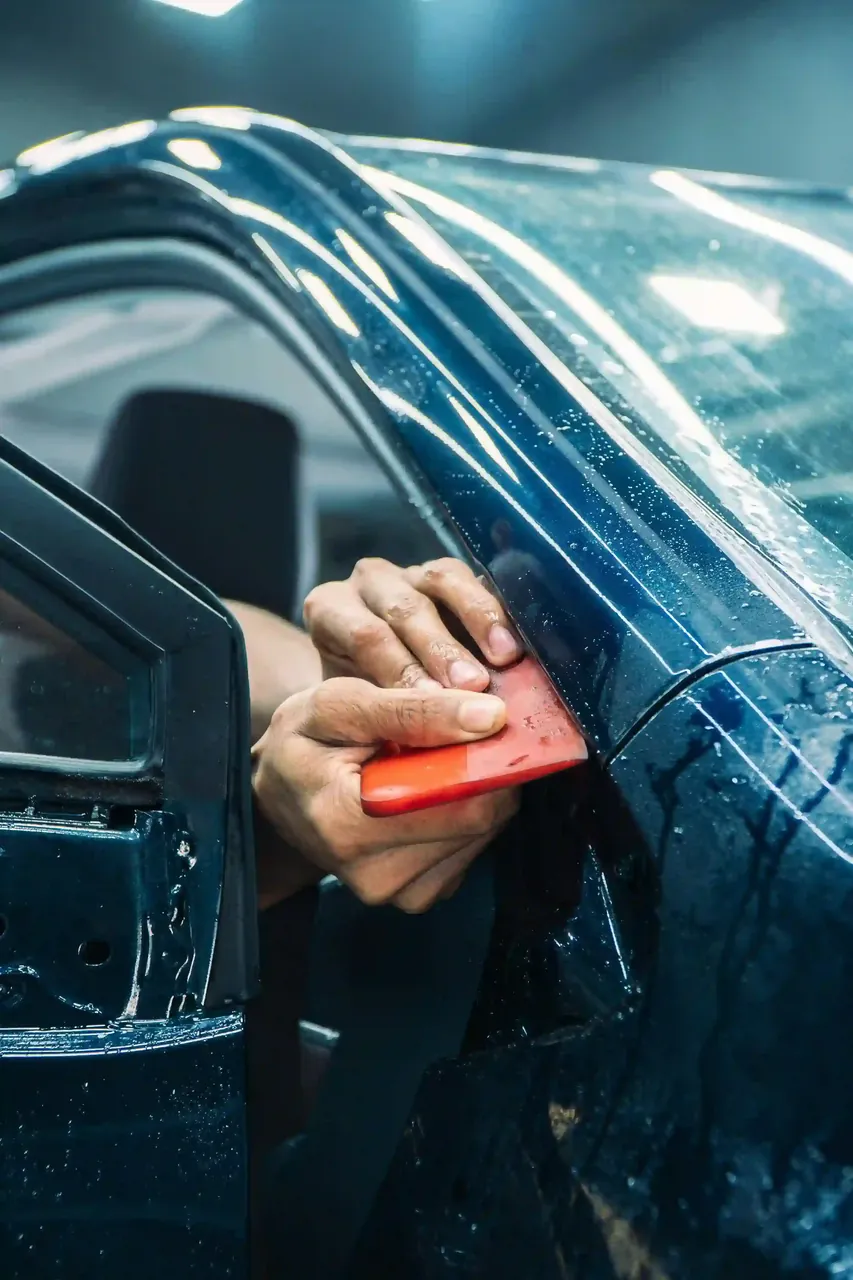
Paint protection film being applied to a car03

How much does underbody coating cost in India?

Prices vary with the product, the car’s size and how much prep the car needs. As reference points from owners on Team-BHP:

  • Dealer and showroom quotes of about ₹5,000 to ₹6,000 for a typical car

  • A dealer offer of ₹4,500 for a branded underbody coating on an Innova Crysta

  • Branded multi-year packages with annual inspections cost more

An older car with existing rust costs more, because the rust has to be treated first. Be wary of prices far below these: the cost is mostly in cleaning and drying the underbody properly, not in the product.

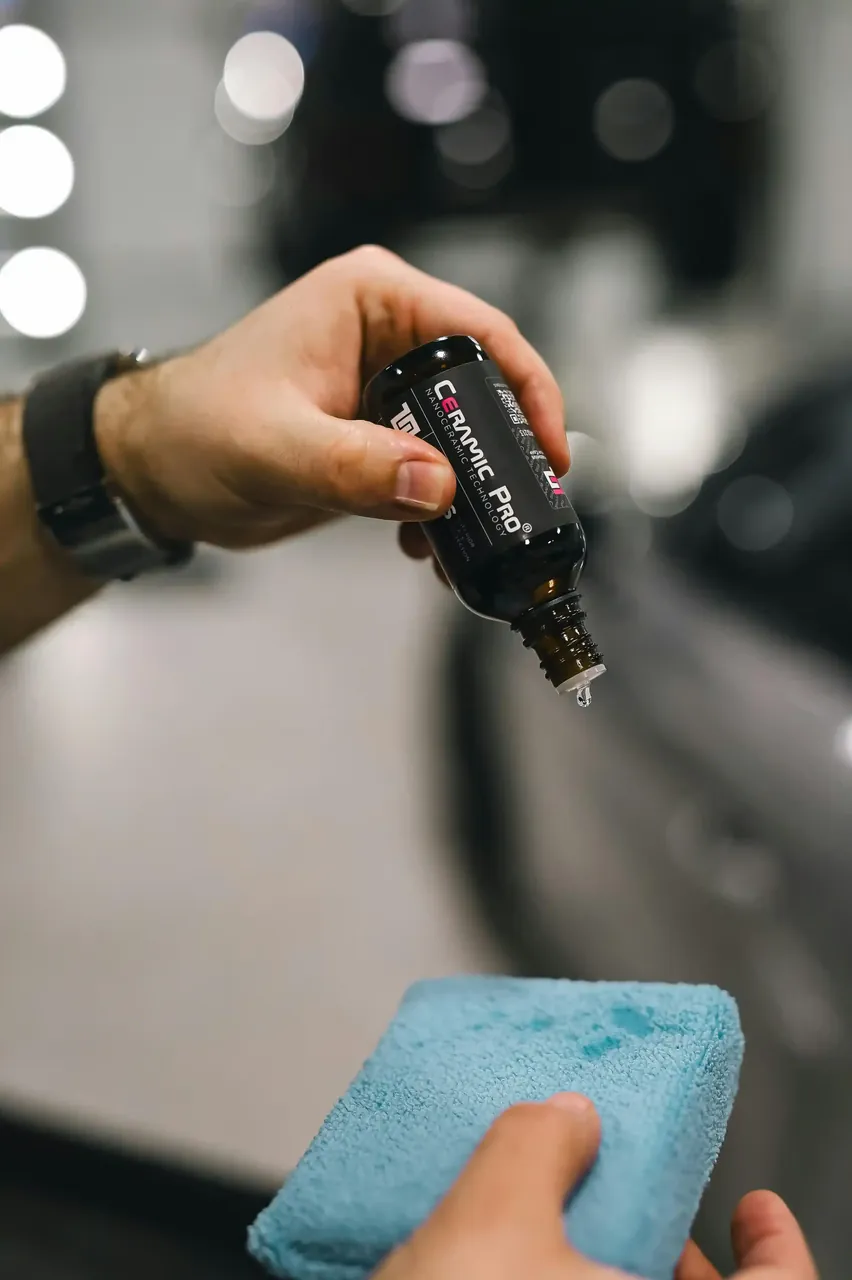
Ceramic coating being applied to a car04

What a proper anti-rust coating job looks like

A good coating is 80% preparation. This is the process to expect, and to ask about:

  1. Lift and inspect. The car goes on a lift or ramp so every part of the underbody can be seen. Existing rust and damaged factory sealant are noted.

  2. Pressure wash and degrease. Wheel wells, sills, the floor pan and suspension mounts are cleaned of mud, salt and oil. Mud holds water against metal; it has to go.

  3. Dry completely. This step takes hours, not minutes. Coating over damp metal seals the moisture in, which is exactly how rubberised coats end up causing rust.

  4. Treat existing rust. Loose rust is brushed off and a rust converter or primer applied.

  5. Mask what mustn’t be coated. Exhaust, brakes and discs, drive shafts, sensors and wiring connectors stay clean.

  6. Apply the coating. Even coverage on the floor pan, sills, wheel arches and cavities.

  7. Cure and check. The car stays put until it’s tack-free, then gets a final look under the lift.

Questions to ask before you pay

  • Which product and brand, and is it wax, polymer or rubberised?

  • Will the car be on a lift, and how long will it be dried before coating?

  • What will be masked?

  • Is there an inspection or top-up after a year?

  • Can I see the underbody before and after?

A shop that does the job in 45 minutes in an open parking lot is not drying anything.

Royal Royce Detailing service05

How often to redo underbody coating in Mumbai

  • Every April or May: a quick underbody inspection before the monsoon. Look for cracked or peeling coating and fresh rust spots.

  • Every 2 to 3 years: a full recoat, sooner if you park near the sea or drive through flooded roads often.

  • After driving through floodwater: an underbody rinse within a day or two, then an inspection. Floodwater carries salt, sewage and silt that sit in the seams.

  • After the monsoon (October): an underbody wash to flush out mud and salt before it dries into the crevices.

Full car spa service in progress06

Underbody coating vs ceramic coating: different jobs

They’re often confused, and they do completely different things. Ceramic coating protects the paint on top: it stops salt film and monsoon grime from bonding and makes the car easy to wash. Underbody coating protects the bare and lightly painted metal underneath, where salt water actually does its damage.

A Mumbai car parked outdoors benefits from both. That’s why our quote form offers an undercarriage + ceramic coating option, and why our PPF vs ceramic coating guide says to protect the underbody separately in Mumbai. For coating prices by car size, see our ceramic coating price guide, or go straight to our ceramic coating page.

Car detailing service in progress07

After you drive through a flooded road

Every Mumbai monsoon has a few days when Andheri subway, Hindmata, Sion or Kurla turn into rivers. If you’ve had to drive through standing water, the next 48 hours matter for the underbody.

  1. Don’t park and forget it. Floodwater is a mix of rain, sewage, silt and salt. Left in seams and box sections, it keeps corroding long after the road dries.

  2. Rinse the underbody and wheel arches within a day or two. A pressure washer aimed into the arches, sills and behind the bumpers flushes out most of the silt.

  3. Check the carpets and boot. If water came in through door seals or drain plugs, dry it immediately, before mould starts. Our Mumbai mould guide covers what to do.

  4. Listen for new noises. Brakes that grind or squeal after deep water may have silt in them; get them checked.

  5. Book an underbody inspection at the end of the monsoon, even if nothing looks wrong. Coating damaged by stones or debris needs a touch-up before rust starts underneath it.

If water rose above the floor, or the engine stalled in water, that’s a different and far more serious problem. Don’t restart it; call your insurer and get the car towed.

Paint protection film being applied to a car08

Buying a used car in Mumbai: check underneath first

A coastal car can look perfect from the outside. As Cars24’s coastal buying guide points out, low mileage doesn’t mean an easy life if the car lived near the sea. Before you pay, ask for the car to go on a lift and check:

  • Floor pan and sills for flaking scale or soft spots, not just surface rust

  • Suspension mounts and subframe bolts, where corrosion weakens structure

  • Brake lines and fuel lines, which are thin metal and corrode quietly

  • Drain holes at the bottom of doors and the boot, for rust staining around them

  • Existing underbody coating, which can hide rust underneath if it was sprayed over a corroded floor. Fresh, thick black coating on an older car is worth a closer look

Surface rust on a 5-year-old Mumbai car is normal and treatable. Structural rust is a reason to walk away or renegotiate hard.

Ceramic coating being applied to a car09

DIY coating vs professional application

Some owners on Team-BHP report doing it themselves: a can of coating and thinner for a few hundred rupees, and a local cleaner to apply it. It can work. The catch is preparation. Without a lift, a proper pressure wash and hours of drying time, a DIY coat often goes over damp mud in the wheel arches, which is the exact condition that traps moisture.

If you go DIY, do it at the end of a dry spell, wash the underbody thoroughly the day before, let it dry overnight, mask the exhaust and brakes, and use a wax-based product rather than thick rubberised paint. If you’d rather not crawl under the car, a professional job costs more but includes the lift, drying and masking that decide whether the coating protects or harms.

Whichever route you take, photograph the underbody before and after. Those photos are useful when you sell the car, when you claim on an anti-corrosion warranty, and when you check next April whether the coating has cracked or worn through anywhere.

Full car spa service in progress10

Signs your underbody needs attention now

  • Orange or brown streaks around door bottoms, sills or drain holes

  • Bubbling paint along the lower edges of doors or wheel arches

  • Flaking scale on suspension mounts or the floor pan

  • A crunchy or rattling noise from under the car over bumps (loose heat shields often rust first)

  • Water pooling in the boot or spare wheel well, which can also cause cabin mould (see our Mumbai monsoon mould guide)

Surface rust can be treated and coated. Rust that’s eaten through metal needs a body shop first.

Car detailing service in progress11

Underbody care across Mumbai

Royal Royce was founded in Mumbai in 2017, and salt and monsoon damage shape how we work here. We clean and inspect underbodies and wheel wells, and offer undercarriage treatment with ceramic coating, across Mumbai, including sea-facing areas covered in our South Mumbai car care guide. Undercarriage treatment and coating are studio jobs with pick-and-drop. For regular doorstep exterior washes between treatments, see car exterior cleaning in Mumbai. Contact our Mumbai branch.

Paint protection film being applied to a car12

Sources

Ceramic coating being applied to a car

Get a free Mumbai quote

3 details. We call you back. No spam.

Frequently asked questions

Is underbody anti-rust coating necessary in Mumbai?

For cars parked outdoors near the sea, yes. Salt air and monsoon water corrode the underbody first. Covered-parking cars inland can often wait until year two or three with yearly checks.

What is the cost of anti-rust coating for a car in India?

Owners report dealer quotes of about ₹4,500 to ₹6,000 for a typical car. Branded multi-year packages and cars needing rust treatment cost more.

Which anti-rust coating is best for Indian conditions?

Wax-based or polymer coatings are widely recommended because they stay flexible and don’t trap moisture. Rubberised coatings suit wheel arches but need perfect preparation.

How long does underbody coating last?

About two to three years in Mumbai conditions, less if you drive through floodwater often. Inspect it every year before the monsoon.

Does a new car need underbody coating?

New cars have factory protection and often an anti-corrosion warranty. In sea-facing areas with open parking, an extra coating in the first year or two is still sensible.

Can underbody coating cause rust?

Yes, if a thick rubberised coat is sprayed over dirty or damp metal. It seals moisture in and cracks with age. Proper drying and prep prevent this.

How often should I wash my car’s underbody in Mumbai?

After driving through floodwater, and at least once after the monsoon to flush out mud and salt. A quick rinse of the wheel wells monthly in the rains helps.

Is ceramic coating the same as anti-rust coating?

No. Ceramic coating protects the paint on top; underbody coating protects the metal underneath. Mumbai cars benefit from both.

Should I use engine oil as anti-rust coating?

No. It washes onto the road, makes it slippery for two-wheelers and pollutes drains. Use a proper wax-based or polymer product.

How long does underbody coating take?

A proper job, with washing, full drying, rust treatment, masking and curing, usually takes most of a day. Very quick jobs usually skip the drying.

Explore our services

See all →

Where we work

4 cities
Mumbai
CityMumbai
Delhi NCR
CityDelhi NCR
Bengaluru
CityBengaluru
Hyderabad
CityHyderabad
Royal Royce Detailing service

Ready to book your detailing?

Free quote in minutes.

Get quote on WhatsAppCall us