After the Mumbai Monsoon: Mould and Fungus on Car Seats, Roof Lining and Seatbelts
Mumbai detailing guide11 min read

After the Mumbai Monsoon: Mould and Fungus on Car Seats, Roof Lining and Seatbelts

By Royal Royce Team

Quick answer: Car mould after the Mumbai monsoon grows because the cabin stays damp for weeks in 80%+ humidity. Remove light surface mould by airing the car in sun, vacuuming outdoors, cleaning hard surfaces with mild detergent and fabric with a diluted vinegar solution, then drying everything fully. Mould in the roof lining, under carpets or with a lingering smell needs professional steam cleaning.

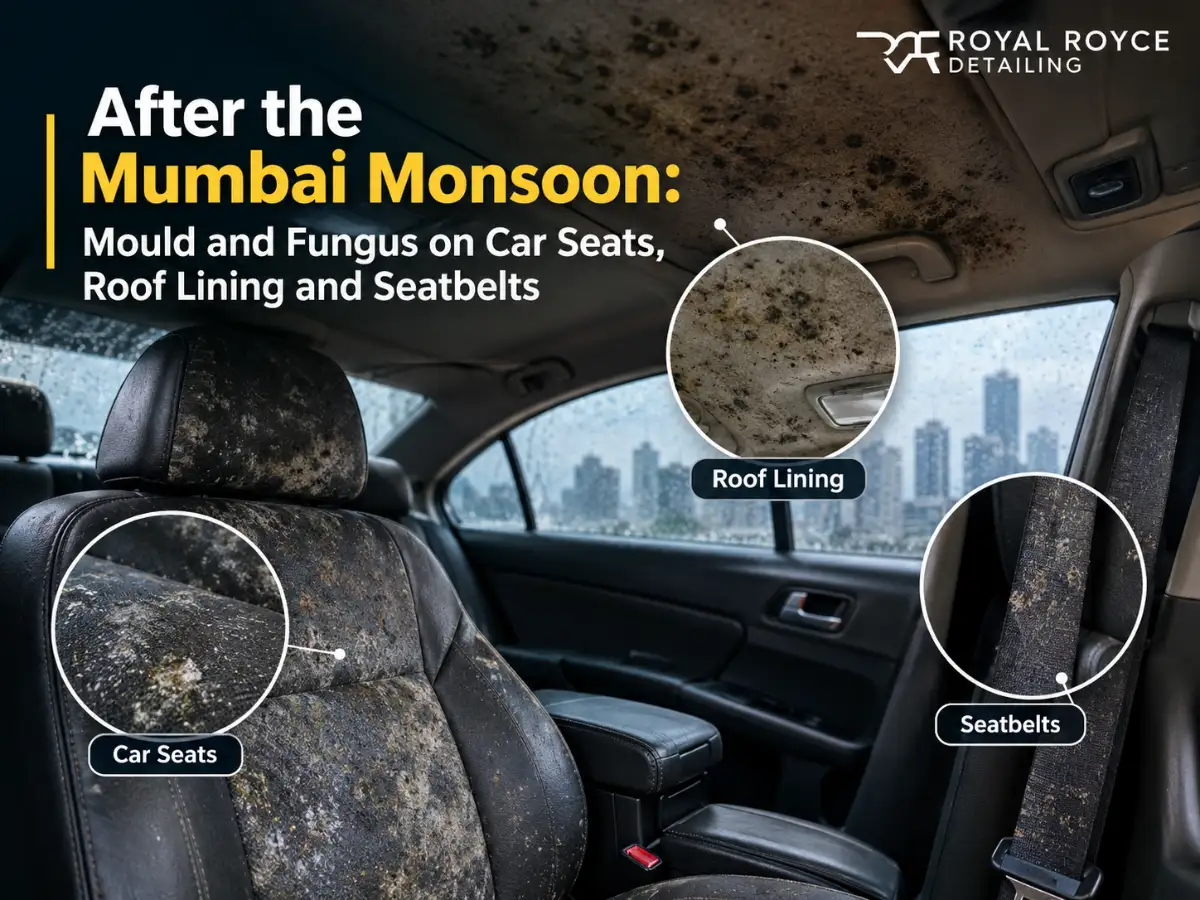
The rains ease in October. You open a car that’s been parked in a Mumbai stilt or basement for a few weeks and find white, powdery patches on the fabric seats, small grey-green spots on a seatbelt, and a smell like a damp cupboard. Wiping the seat makes the patch fade. Two weeks later it’s back.

That’s car mould, and it’s one of the most common things Mumbai owners deal with after every monsoon. Here’s why it grows, what’s safe to use, and how to make sure next year’s monsoon doesn’t do the same.

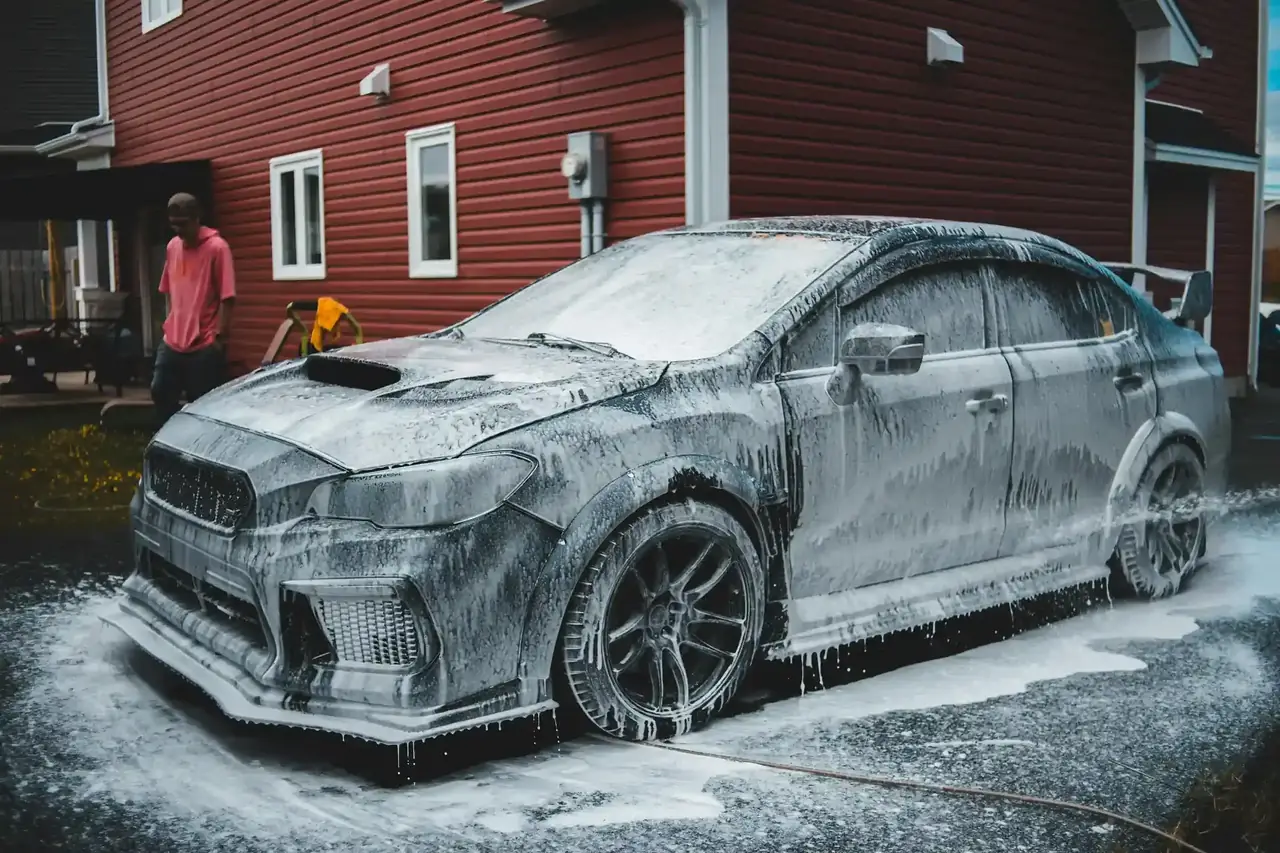
Full car spa service in progress01

Why mould grows in cars after the Mumbai monsoon

Mould needs moisture and time. A Mumbai monsoon supplies both.

Average relative humidity at Santacruz climbs to 81% in July and August, and Colaba reaches 85%, according to IMD normals summarised on Wikipedia. For comparison, the US Environmental Protection Agency advises keeping indoor humidity below 60% to prevent mould. A closed car in July sits well above that for weeks.

The EPA also notes that damp materials dried within 24 to 48 hours usually won’t grow mould. In a car, they rarely dry that fast:

  • Wet shoes and umbrellas soak floor mats, and the carpet under them stays damp

  • Closed windows trap humid air, especially in covered parking with no sun

  • Leaky door or windscreen seals let water in during heavy rain

  • Leaves block sunroof or door drain holes, so water runs into the cabin instead of out

  • A car that sits unused for days never gets the drying effect of running the AC

Fabric seats, roof linings and carpets are porous. Once mould gets into the foam or backing, surface wiping can’t reach it, which is why it keeps coming back.

Car detailing service in progress02

Where to look for mould in your car

Check these spots, ideally in daylight with the doors open:

Area

What mould looks like there

Fabric seats

White or grey powdery patches, often on the seat base

Seatbelts

Small dark or green dots; pull the belt all the way out to check

Roof lining

Grey spots or a faint stain pattern, often near the sunroof or rear

Carpet under mats

Damp patches, dark spots, a strong musty smell

Leather seats and steering wheel

A white bloom that wipes off and returns

Boot and spare wheel well

Standing water, rust stains, musty smell

AC vents

A musty smell when the fan starts

Not sure if it’s mould or dust? Mould tends to be fuzzy or powdery, grows in spots, smells musty and returns after wiping. Dust doesn’t.

Car detailing service in progress

Get a free quote

Get your quote in minutes on WhatsApp.

Get my quote
Paint protection film being applied to a car03

Is car mould harmful?

It can be. The EPA lists allergic reactions such as sneezing, a runny nose, red eyes and skin rash, and says mould can trigger asthma attacks and irritate the eyes, nose, throat and lungs even in people who aren’t allergic. Dead mould can still cause allergies, so it has to be removed, not just killed.

If anyone in the family has asthma, allergies, or is very young or elderly, keep them out of the car until it’s cleaned, and consider a professional job rather than DIY.

Ceramic coating being applied to a car04

How to remove light mould from your car yourself

This works for small surface patches on seats, belts and hard plastics. Wear an N95 mask and gloves, as the EPA recommends for mould cleanup.

  1. Air it out first. Park in sunlight with all doors open for an hour or two. Sun and moving air start drying the cabin.

  2. Vacuum outdoors. Vacuum seats, carpets and mats outside the car so spores don’t resettle inside. Empty the vacuum outside too.

  3. Clean hard surfaces. Wipe the dashboard, door panels and plastics with mild detergent and water, then dry them with a clean cloth.

  4. Treat fabric spots. Mix white vinegar and water 1:1, spot-test on a hidden area, then dab (don’t soak) the patch with a microfibre. Blot dry.

  5. Clean seatbelts. Pull the belt fully out and clip it so it stays extended. Wipe with mild detergent, then leave it extended until completely dry. Never let it retract wet.

  6. Leather: use a pH-balanced leather cleaner, then a leather conditioner. Vinegar can dry leather out.

  7. Dry everything fully. Leave the doors open in the sun or run the AC with the windows slightly open for 20 to 30 minutes.

What not to use

  • Bleach. It discolours upholstery, and the EPA doesn’t recommend it for routine mould cleanup. Never mix it with ammonia-based cleaners; the fumes are toxic.

  • Soaking the seats. Too much water sinks into the foam and grows more mould.

  • Air freshener alone. It covers the smell for a day and leaves the cause untouched.

Royal Royce Detailing service05

When to call a professional

DIY handles light, surface mould. Call a professional if:

  • Mould is in the roof lining (it sags if over-wetted) or under the carpets

  • The musty smell remains after cleaning

  • The car took in water during a flood or heavy rain

  • Someone in the family has asthma or allergies

  • Mould keeps coming back within weeks

A professional job reaches where home cleaning can’t. Our steam sanitisation interior clean treats seats, carpets, vents and trims with high-temperature steam, which uses very little water and kills mould on contact. You can see how the process works in our car steam cleaning guide for Mumbai and our car deep cleaning service in Mumbai.

If the main problem is smell rather than visible mould, read our guide to car smell removal in Mumbai, which goes through damp, smoke, food and AC odours one by one. Our car interior cleaning price guide shows what each level of cleaning typically costs.

Full car spa service in progress06

Different surfaces need different treatment

The most common DIY mistake is cleaning everything the same way. Here’s what each material needs.

Surface

Safe approach

Avoid

Fabric seats

Vacuum, dab with diluted vinegar or an upholstery cleaner, extract, dry fast

Soaking; scrubbing hard enough to fuzz the fabric

Leather and leatherette

pH-balanced leather cleaner, soft brush in the seams, then conditioner

Vinegar, alcohol, household detergents

Roof lining

Lightly dampened microfibre, blot only, minimal moisture

Spraying directly; wet cleaning loosens the glue and the lining sags

Carpets

Lift mats, vacuum, shampoo and extract, dry with doors open or air movers

Leaving them damp under rubber mats

Seatbelts

Fully extended, mild detergent, dry extended

Retracting them wet; bleach, which weakens the webbing

Plastics and dashboard

Mild detergent, wipe dry

Greasy dressings, which give spores something to cling to

AC vents

Brush and steam the vent openings

Spraying fragrance into the vents to mask the smell

Leather deserves a special note. The white bloom on leather in Mumbai monsoons is often mould feeding on body oils and old conditioner. Cleaning it properly and then reconditioning matters, because leather left dry after cleaning cracks in the October heat that follows.

Car detailing service in progress07

What a professional mould treatment involves

If you book a professional, this is roughly what should happen, so you can check you’re getting the full job:

  1. Inspection of seats, belts, roof lining, carpets, boot and vents, with photos of the affected areas.

  2. Removal of mats and, where needed, lifting carpet edges to check the floor underneath for standing moisture.

  3. HEPA vacuuming to collect loose spores without blowing them around.

  4. Steam treatment of fabric, carpets, belts and vents. Steam reaches into stitching and foam where wiping can’t.

  5. Extraction cleaning of fabric seats and carpets, with minimal moisture left behind.

  6. Leather cleaning and conditioning, and careful dry-cleaning of the roof lining.

  7. Drying with air movers until carpets and seats are dry to the touch, not just on the surface.

  8. A source check: pointing out blocked drains, wet carpets or failed seals that let water in.

Without the last step, you’re paying to clean mould that will grow back.

Paint protection film being applied to a car08

Replace the cabin air filter after the monsoon

The cabin filter sits behind the glovebox in most cars, and through a Mumbai monsoon it soaks up moist air, pollen and spores. A damp, dirty filter becomes a mould source of its own and blows musty air into the cabin every time the fan runs. Ask your service centre to check it at the first service after the rains, and replace it if it’s discoloured or smells. It’s a small part and usually a quick job.

While the glovebox is open, check the AC drain too. If the passenger footwell carpet is damp after the AC has been running, the evaporator’s drain pipe may be blocked, and the water that should drip under the car is soaking the carpet instead. That’s a constant mould source no amount of cleaning will beat until it’s cleared.

Ceramic coating being applied to a car09

Find the source, or the mould comes back

The EPA makes the point plainly: clean mould without fixing the water problem, and it returns. In a car, check:

  • Door and windscreen seals. Look for cracks, gaps or water marks on the trim below them.

  • Drain holes. Sunroof drains and the bottom edges of doors have drain holes that leaves block. Clear them.

  • Carpet under the mats. Press it with your hand after rain. If it’s wet, find where the water enters.

  • The boot. Lift the floor and check the spare wheel well for standing water.

  • AC drain. If water drips inside the cabin instead of under the car, the AC drain may be blocked. That’s a job for your service centre.

Full car spa service in progress10

Monsoon car care tips to stop mould next year

  • Switch to rubber mats in June. They hold water you can tip out, instead of soaking it into carpet.

  • Bag wet umbrellas. Keep a plastic bag or tray for them.

  • Use the AC. It dries cabin air. Running the fan for a few minutes with the AC off before you park helps dry the AC system.

  • Drive the car. A car parked for weeks in a humid basement is a mould incubator. Start and drive it at least twice a week.

  • Moisture absorbers. Dehumidifier bags or silica sachets under the seats help in long parking spells; replace them when full.

  • Clean before and after. An interior clean in May removes the dirt mould feeds on, and another in October deals with anything that grew.

Our monsoon interior cleaning guide for Mumbai covers the full routine. Salt air and rain also attack the underbody, which is a separate job; see why Mumbai owners should ask about the undercarriage first.

Car detailing service in progress11

Doorstep mould treatment across Mumbai

Royal Royce started in Mumbai in 2017, and monsoon interiors are part of every year here. We clean at your doorstep across Mumbai. Coatings and paint correction are studio jobs, with pick-and-drop so the car is collected and returned. Contact our Mumbai branch.

Paint protection film being applied to a car12

Sources

Ceramic coating being applied to a car

Get a free Mumbai quote

3 details. We call you back. No spam.

Frequently asked questions

Why is there white fungus on my car seats?

It’s mould growing on fabric that stayed damp in high monsoon humidity. It usually starts on seat bases, where wet clothes and damp air sit longest.

How do I remove mould from car seats?

Air the car in the sun, vacuum outdoors, dab fabric spots with a 1:1 white vinegar and water mix after a spot test, and dry fully. Deep or recurring mould needs steam cleaning.

Is mould in a car dangerous?

It can cause allergic reactions and trigger asthma, and irritate eyes, nose and throat. Keep vulnerable family members out until it’s cleaned.

Can I use bleach to remove mould from my car?

No. It discolours upholstery and isn’t recommended for routine mould cleanup. Never mix it with ammonia-based cleaners.

How do I clean mould off seatbelts?

Pull the belt fully out and clip it, wipe with mild detergent, and leave it extended until completely dry. Badly stained or weakened belts should be checked by a service centre.

Why does my car smell musty after the monsoon?

Damp carpets, mats or foam are growing mould or bacteria. Find and dry the damp area; fragrance alone won’t fix it.

How long does it take for mould to grow in a car?

Damp materials that aren’t dried within 24 to 48 hours can start growing mould, according to the EPA.

Can mould come back after cleaning?

Yes, if the water source isn’t fixed or the materials aren’t dried completely. Check seals, drain holes and carpet under the mats.

How do I stop mould in my car during the monsoon?

Use rubber mats, bag wet umbrellas, run the AC, drive the car regularly, use moisture absorbers and get the interior cleaned before and after the rains.

Does steam cleaning kill mould in cars?

Yes. High-temperature steam kills mould on contact and uses little water, so seats and carpets dry quickly.

Explore our services

See all →

Where we work

4 cities
Mumbai
CityMumbai
Delhi NCR
CityDelhi NCR
Bengaluru
CityBengaluru
Hyderabad
CityHyderabad
Royal Royce Detailing service

Ready to book your detailing?

Free quote in minutes.

Get quote on WhatsAppCall us