Car Upholstery Cleaning in Bangalore: Rain-Damp Seats, Kids and Pets
Bengaluru detailing guide11 min read

Car Upholstery Cleaning in Bangalore: Rain-Damp Seats, Kids and Pets

By Royal Royce Team

Quick answer: For car upholstery cleaning, vacuum thoroughly, treat each stain with the right product (enzyme cleaner for milk, food and vomit), then shampoo and extract with as little water as possible and dry the seats fast with airflow. In Bangalore’s rainy months, slow drying is the main risk, because damp seat foam turns musty within a day or two.

Bangalore family cars live hard lives. School runs, weekend drives to Nandi Hills, a dog in the back seat, a toddler who drops half a biscuit into the seat crease every morning. Then the rain. You come back from the office in a shower, the kids climb in with wet uniforms, and by Friday the back seat smells faintly of a damp towel.

Fabric seats are comfortable and cool in the sun. They also absorb everything. Here’s how to clean them properly, what goes wrong when people try, and when a professional clean is worth it.

Full car spa service in progress01

Why seats get worse in Bangalore’s rainy months

Bangalore’s rain isn’t concentrated in a few weeks like Mumbai’s. The city gets about 1,078 mm a year, spread from April to November, with the wettest months being September (208 mm), October (186 mm) and August (163 mm), according to 1991 to 2020 normals on Wikipedia. Many of those days bring an afternoon or evening shower, which is exactly when people get into the car.

That pattern does three things to upholstery:

  • Wet clothes and umbrellas put water into seat fabric, and the foam underneath soaks it up.

  • Short trips mean the AC rarely runs long enough to dry the cabin.

  • Basement parking with little airflow keeps the cabin humid overnight.

Damp foam plus food crumbs plus body sweat is a perfect home for bacteria and mould. The US EPA notes that damp materials not dried within 24 to 48 hours can start growing mould. In a car seat, that’s how a faint damp smell becomes a permanent one.

Car detailing service in progress02

Know your seat material first

The right method depends on what the seats are made of. Check the owner’s manual or the seat label if you’re unsure.

Material

How to recognise it

Cleaning approach

Watch out for

Woven fabric

Textured weave, most common in hatchbacks and many SUVs

Vacuum, pre-treat, shampoo, extract

Over-wetting the foam

Velour or knit

Soft, slightly fuzzy

Gentle agitation with a soft brush

Fuzzing the pile with hard scrubbing

Alcantara or suede-like

Soft, matte, often in premium cars

Dedicated suede cleaner, very little moisture

Water rings and matting

Leatherette (PU or PVC)

Smooth, slightly plasticky, cool to touch

Mild cleaner, wipe, no soaking

Harsh solvents that crack it

Leather

Fine grain, natural smell

pH-balanced leather cleaner, then conditioner

Vinegar, alcohol, household detergent

This guide focuses on fabric, because that’s where Bangalore families have the most trouble.

Car detailing service in progress

Get a free quote

Get your quote in minutes on WhatsApp.

Get my quote
Paint protection film being applied to a car03

How to clean fabric car seats at home

You’ll need a vacuum with a crevice tool, a soft upholstery brush, an enzyme-based cleaner for organic stains, a fabric or upholstery shampoo, several microfibre towels and a spray bottle of clean water. A small wet-dry vacuum makes a big difference if you have one.

  1. Remove everything. Child seats, seat covers, mats, toys and the forgotten things under the seats.

  2. Vacuum slowly. Seat creases, stitching, the gap between the seat base and backrest, and under the seats. Push the seats fully forward and back to reach the rails. Most smells start with what’s hiding here.

  3. Pre-treat stains. Spray the right product on each stain (see the table below) and let it sit for the time on the label, usually five to ten minutes.

  4. Shampoo lightly. Spray or foam upholstery shampoo onto the fabric, or onto the brush, rather than soaking the seat. Agitate gently in overlapping strokes.

  5. Extract or blot. Use a wet-dry vacuum to pull out the dirty solution. Without one, press a clean, dry microfibre firmly into the fabric and lift, repeating with fresh towels until little moisture comes up.

  6. Rinse lightly. Mist with clean water and extract again, so no shampoo residue is left to attract dirt.

  7. Dry fast. Doors open, fans if you have them, sun if possible. In the rainy season, park somewhere with airflow and run the AC with the windows slightly open. Don’t close the car up while the seats are damp.

One seat at a time is fine. Doing all of them in one rushed afternoon is how people over-wet the foam.

Common stains and how to treat them

Stain

Treat with

Tip

Milk, formula, vomit

Enzyme cleaner

Acts on the proteins that cause the sour smell; give it time to work

Juice, soft drinks

Mild upholstery cleaner, then rinse

Sugar residue attracts dirt if it isn’t rinsed out

Chocolate, ice cream

Scrape off excess, enzyme cleaner

Blot, never rub, or it spreads

Chai and coffee

Mild cleaner, blot, repeat

Older tannin stains may only lighten

Grease, ghee, oily food

Degreasing upholstery cleaner

Work from the outside of the stain inward

Ink, crayon

Spot-test a solvent-based cleaner first

Can spread on some fabrics; a pro may be safer

Mud

Let it dry, brush and vacuum, then clean

Wet mud smears deeper into the weave

Pet accidents

Enzyme cleaner, then extraction

Removes the odour source rather than masking it

Ceramic coating being applied to a car04

Kids’ car seats need different rules

The child seat itself is safety equipment, so clean it the way the maker says, not the way you’d clean upholstery. Britax’s cleaning guidance, for example, says not to submerge harness straps or use harsh soaps, because it may weaken the fibres, and not to machine wash, iron or bleach the webbing. It also warns against soaking the buckle or using detergents, solvents or lubricants on it, because they can affect how the buckle works.

Most seat covers can come off and be washed by hand or on a gentle cycle; check your manual. Wipe harness straps with a damp cloth and mild soap only. And while the child seat is out, clean the car seat underneath it properly; that patch usually hides the worst crumbs and spills in the car.

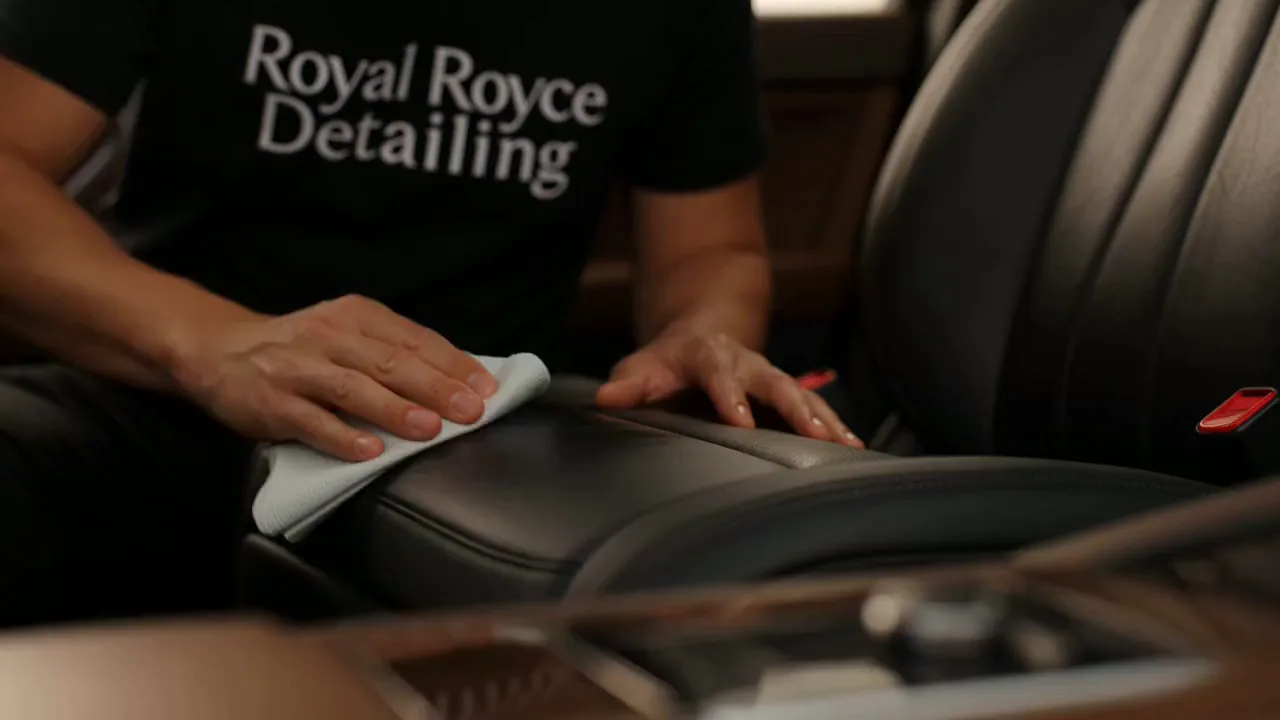
Royal Royce Detailing service05

Pet hair: why the vacuum isn’t enough

Dog hair weaves into fabric. A vacuum lifts the loose hair and leaves the rest. Before vacuuming, drag a rubber glove, a rubber pet-hair brush or a pumice-style hair stone across the seat in one direction. The hair balls up and comes away. Then vacuum.

For regular trips with a dog, a waterproof seat cover or hammock for the back seat saves you this job most weeks. Wash it like a blanket.

Full car spa service in progress06

What goes wrong when you clean seats yourself

Most DIY upholstery problems come from one of these:

  • Too much water. The foam under the fabric soaks it up and takes days to dry. That’s how you get mould, a musty smell, and brown water rings as the dirt wicks back up to the surface.

  • Household products. Dish soap foams too much and leaves residue. Bleach and strong cleaners can discolour fabric.

  • Hard scrubbing. It fuzzes the fabric and spreads the stain. Blot and brush gently.

  • No extraction. Without pulling the dirty water back out, you’ve just moved the dirt deeper into the seat.

  • Perfume instead of cleaning. It covers the smell for a day.

If you’ve already had a water ring appear after a DIY clean, a professional extraction of the whole seat panel usually evens it out.

Car detailing service in progress07

When to book a professional upholstery clean

DIY is fine for maintenance and fresh spills. A professional clean is worth it when:

  • Stains have set for weeks or months

  • There’s a smell that returns after cleaning, usually from the foam

  • A child has been sick in the car or there’s been a pet accident

  • The seats have been damp for a while, or there’s visible mould

  • The car took in water, for example in a flooded basement (see our guide to what to do when your car is flooded in Bangalore)

  • You’re selling the car and want it to present well

A professional job uses hot water extraction to rinse deep into the fabric and pull the dirt and water out together, enzyme pre-treatments matched to each stain, steam for stitching, vents and seat rails, and air movers to dry the seats in a couple of hours instead of a couple of days. Our interior deep cleaning service includes seat shampoo, carpets, mats, roof lining and stain treatment, and our steam sanitisation clean adds steam throughout for smells and hygiene. Our Delhi car seat cleaning guide goes deeper into stain chemistry, and the steam cleaning guide explains why steam suits damp cabins.

For typical costs by car size, see our car interior cleaning price guide. Be honest with yourself about old stains, too: stains that have been baked in for months often lighten rather than disappear, and any good cleaner will tell you that before starting.

Paint protection film being applied to a car08

Keeping seats clean between cleans

  • Shake out mats weekly. Grit from them ends up in the seats.

  • Keep a microfibre and a small bottle of upholstery spray in the car for fresh spills. A spill blotted in the first ten minutes rarely becomes a stain.

  • Wipe wet seats with a dry towel after the kids get in from the rain.

  • Use washable seat covers if your car does a lot of school runs, and wash them monthly.

  • Air the car with the doors open on dry weekends during the rainy season.

  • Vacuum the seat creases every couple of weeks.

  • Book a deep clean every four to six months, ideally once after the September to October rains.

If mould has already started, our guide to mould and fungus in cars covers safe removal; it’s written for Mumbai but the method is the same.

Ceramic coating being applied to a car09

Are fabric protector sprays worth it?

Fabric protectors leave a thin water- and stain-repellent layer on the fibres, so spills bead up for a few seconds instead of soaking straight in. For a family car with light-coloured fabric, that few seconds is often the difference between a blot and a stain.

They’re worth trying if you:

  • Have young children or carry food and drinks in the car often

  • Have light grey or beige fabric that shows every mark

  • Have just had the seats deep cleaned and want them to stay that way

A few cautions. Apply protector only to fully clean, dry seats, or you seal the dirt in. Spray in a ventilated space with the doors open, and let it dry completely before anyone sits down. Spot-test on a hidden area first, especially on velour or Alcantara-type fabrics. And expect to reapply every few months, because sitting and cleaning wear it away. It’s a helper, not armour: you still need to blot spills quickly.

Full car spa service in progress10

Doorstep upholstery cleaning in Bangalore

Royal Royce cleans car interiors at your doorstep across Bangalore, including Whitefield, Sarjapur Road and Electronic City. We need water and a power point at your parking. Before you book anyone, our guide on what to check before booking car detailing in Bangalore is worth a read. Contact our Bangalore branch.

Car detailing service in progress11

Sources

Ceramic coating being applied to a car

Get a free Bengaluru quote

3 details. We call you back. No spam.

Frequently asked questions

How do I deep clean fabric car seats?

Vacuum thoroughly, pre-treat stains, shampoo lightly, extract the dirty solution with a wet-dry vacuum or by blotting, rinse lightly and dry fast with airflow.

What is the best way to remove milk or vomit stains from car seats?

An enzyme cleaner. It breaks down the proteins that cause the sour smell. Give it time to work, then extract and dry.

Why do my car seats smell damp?

The foam under the fabric has stayed wet, usually from wet clothes in the rainy season or over-wetting during cleaning. It needs extraction and thorough drying.

How long do car seats take to dry after cleaning?

With professional extraction and air movers, about one to two hours. After a DIY clean without extraction, it can take a day or more.

Can I use dish soap to clean car seats?

It’s better not to. It foams heavily, leaves residue that attracts dirt, and is hard to rinse out of foam.

How do I get dog hair out of car seats?

Drag a rubber glove or rubber pet-hair brush across the fabric to ball up the hair, then vacuum. A seat hammock prevents most of it.

Can I machine wash my child’s car seat straps?

No. Makers such as Britax say not to machine wash, submerge or bleach harness straps. Wipe them with a damp cloth and mild soap and follow your seat’s manual.

How often should car upholstery be cleaned?

A deep clean every four to six months for most family cars, plus regular vacuuming and prompt spill cleaning.

Can old stains be removed from car seats?

Often they lighten considerably, but stains that have set for months may not disappear completely.

Does Royal Royce clean car seats at home in Bangalore?

Yes. Our team cleans car interiors at your doorstep across Bangalore, needing only water and a power point.

Explore our services

See all →

Where we work

4 cities
Mumbai
CityMumbai
Delhi NCR
CityDelhi NCR
Bengaluru
CityBengaluru
Hyderabad
CityHyderabad
Royal Royce Detailing service

Ready to book your detailing?

Free quote in minutes.

Get quote on WhatsAppCall us