
Car Was in an Accident and Repainted — Why It Now Needs Paint Correction
A repainted car often doesn’t look fully perfect because repainting only fixes the damaged panel, not the original factory-level finish. That’s why it can still feel slightly dull or uneven in sunlight.
After an accident, getting your car back feels like relief. The dents are gone, the paint is fresh, and everything looks restored at first glance.
But in daylight, something feels off. The shine isn’t as deep, and the surface doesn’t reflect like it used to under the sun or streetlights.
We often hear from owners: “It looks repainted, but it doesn’t feel finished.” And that’s true—the repair is done, but the final visual refinement is still missing.
Repainting Is Not the Same as Factory Finish
A factory finish and a workshop repaint are completely different, even if the same colour code is used.
In factories, paint is applied by robots in a dust-free, fully controlled environment, so every panel reflects light evenly and perfectly.
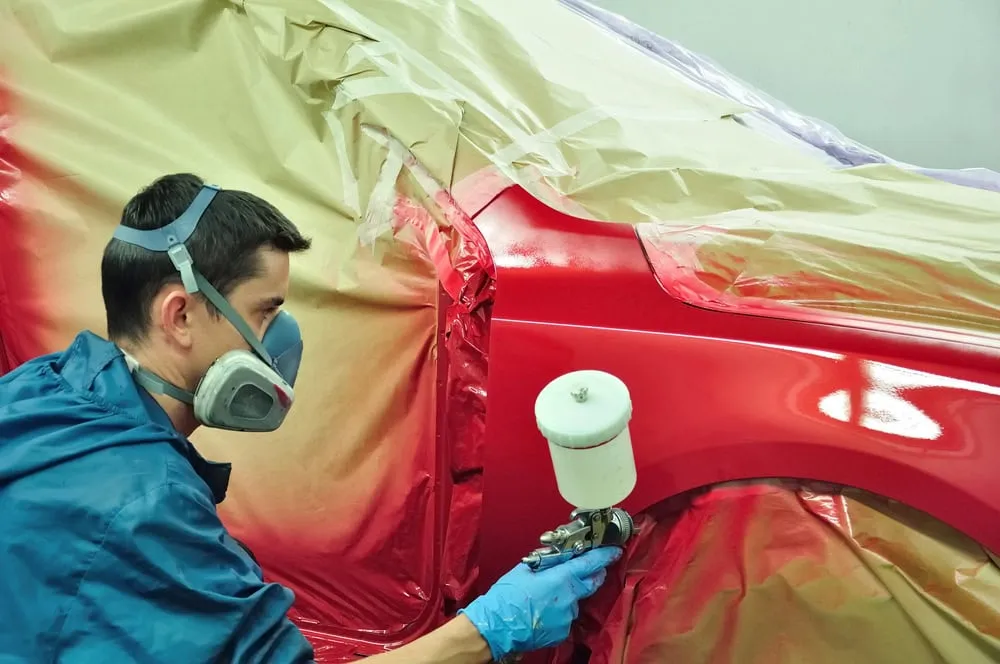
In body shops, the process is manual. Even with skilled work, small imperfections can appear, like:
Slight orange peel texture
Dust particles in the clear coat
Minor colour shifts in sunlight
Light swirl marks from final polishing
Uneven gloss between panels
Because of this, light doesn’t reflect smoothly. Instead of a clean mirror effect, it scatters slightly, which reduces depth and clarity.
That’s why a repainted car often looks “almost perfect” but not truly flawless.
Why Your Repainted Car Still Doesn’t Shine Like Before
The issue is not paint quality, but finishing precision.
After repainting, the clear coat still needs time to settle and fully cure. During this stage, the surface remains slightly soft, and most body shops focus on delivery and repairs rather than microscopic finish perfection.
There are three main reasons the final look falls short:
1. Human application vs machine precision
Unlike factory robots, manual spraying naturally creates tiny variations in pressure and angle, even with skilled work.
2. Environmental dust
Tiny airborne particles can settle on wet paint and get locked inside the clear coat after drying.
3. Limited final refinement
Most workshops do only a basic polish to make the surface presentable, not optically perfect.
The result is simple: the paint is there, but the clarity isn’t fully restored.
Visually, it’s like this— A factory finish is a clean glass mirror. A workshop repaint is slightly uneven in reflection.
The 3D Layer Reality of Automotive Paint
Every car’s paint has simple layers underneath:
A base layer that protects the metal
The colour you actually see
A top shiny layer that gives gloss and shine
That top shiny layer is what makes your car look deep, glossy, and reflective.
When a car is repainted, this top layer is sprayed by hand. Even when done carefully, it doesn’t settle perfectly smooth like factory paint. The tiny unevenness is not easy to notice at first, but it shows up clearly when sunlight or streetlights hit the car.
That’s where paint correction helps. It gently smooths out that top layer so the surface reflects light evenly again, bringing back that clean, mirror-like shine.
The Missing Step After Repainting
Once your car comes back from the workshop, most owners feel everything is complete. The dents are gone, the colour looks fresh, and the job feels finished at first glance.
But in real daylight, the repainted panel often doesn’t match the rest of the car perfectly. The shine can feel slightly uneven, and the reflection doesn’t look as clean or deep as factory panels.
This is where paint correction comes in. It is the final refinement done after repainting to even out the surface and restore a smooth, consistent reflection so the panel blends properly with the rest of the car.
When Should You Get Paint Correction After Repainting?
Timing is critical. Fresh paint cannot be worked on immediately, no matter how tempting it may be.
Here is a practical guideline:
Full Repaint → Wait 2–4 weeks before paint correction.
Partial Panel Repaint → Inspect the panel after the recommended curing period.
Accident Repair with Paint Work → Perform full paint correction only after the paint has properly settled.
Before Ceramic Coating → Paint correction is mandatory before applying the coating.
Important Note → The 2–4 week waiting period is crucial because fresh paint continues to outgas and harden. Correcting it too early can permanently damage the finish.
The Mistake Most Car Owners Don’t Realise They’re Making
A very common misunderstanding is thinking that repainting completes the job. Most owners pick up the car, feel relieved, and assume the slightly dull finish is just normal after repair.
The problem is, this final surface finish is what decides how the car actually looks in real light. If it is left as it is, the uneven reflection simply stays and becomes something you stop noticing over time.
Lighting also plays a big role here. In shaded parking, everything looks fine, but the moment the car goes under direct sunlight or strong lights, small surface issues start showing up clearly.
You can easily check it yourself with your phone flashlight by holding it close to the panel and slowly moving it across the surface. A clean finish will show a sharp, focused light point, while an imperfect surface will make the light look slightly blurred or scattered.
Why Professional Paint Correction Is Not Just Polishing
It is important to separate basic polishing from true paint correction.
Basic polishing is usually cosmetic. It improves shine temporarily but does not remove deeper surface inconsistencies.
Professional paint correction involves:
Multi-stage machine polishing
Controlled lighting inspection
Defect mapping across panels
Abrasive refinement at micro-level precision
It requires experience, calibrated tools, and controlled environments. If done incorrectly, it can reduce clear coat thickness or introduce new defects.
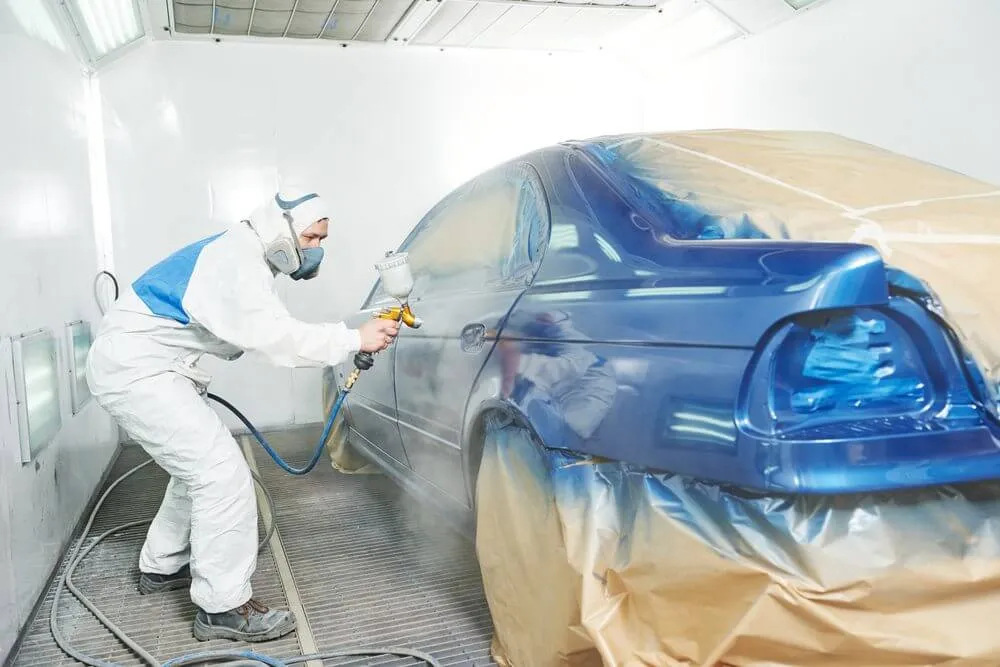
That is why post-repaint vehicles require careful handling, especially in cities like Delhi, Mumbai, Bangalore, and Hyderabad, where heat, dust, and humidity accelerate surface wear.
Phase 2 of Car Restoration: Where Royal Royce Detailing Comes In
Once your car has been repainted, the next logical step is not waxing or coating—it is proper paint correction.
At Royal Royce Detailing, we specialise in this exact Phase 2 of automotive restoration. We work specifically on vehicles that have undergone accident repairs and repainting, where the goal is not just shine, but complete visual restoration.
We approach each car with a detailed inspection process to identify:
Uneven clear coat levelling
Residual swirl marks from workshop polishing
Dust nibs embedded in paint
Dull reflection zones across panels
Our correction process is designed to bring back true showroom-level clarity, not temporary gloss.
What We Offer
Deep paint correction for repainted vehicles
Swirl mark and defect removal through controlled polishing stages
Gloss restoration that enhances colour depth and reflection
Professional inspection lighting for precision correction
Doorstep car cleaning service for ongoing maintenance convenience
We operate across Delhi, Mumbai, Bangalore, and Hyderabad, making professional-grade detailing accessible without the inconvenience of workshop visits.
Why Car Owners Trust Royal Royce Detailing
Our approach is built around one principle: finishing matters as much as repairing.
Car owners choose us because we focus on what most repair workflows leave behind:
We specialise in post-repaint refinement, not general polishing
We use controlled lighting systems for defect detection
We prioritise surface preservation while improving clarity
We offer doorstep convenience, so your schedule is never disrupted
We bring consistent quality across multiple metro cities
Instead of treating paint correction as an add-on, we treat it as an essential finishing stage of every repaint process.
Final Thoughts: Your Car Deserves Its True Finish
A repainted car is not incomplete because of poor workmanship. It is incomplete because it hasn’t yet been refined.
Body shops restore structure and colour. But the visual perfection you expect comes only after paint correction completes the process.
If your car has recently been repainted or repaired, look at it closely in sunlight. The difference is often subtle, but once you notice it, you cannot unsee it.
We always say this to car owners: A repaint fixes the damage, but paint correction reveals the beauty.
At Royal Royce Detailing, we bring that final layer of perfection to your car—so it doesn’t just look repaired, it looks truly restored.
FAQ
1. Can I notice repaint issues without sunlight?
Not always. Many imperfections stay hidden in shade and only appear clearly under direct sunlight or strong white light.
2. Does every repainted car need correction?
Not necessarily. It depends on how the paint was applied and finished. Some high-quality repaints already have better surface levelling.
3. Will the correction change my car’s paint colour?
No, it does not change colour. It only improves how evenly the surface reflects light, making the same colour look deeper and cleaner.
4. Can I do anything to protect fresh paint at home?
Yes, avoid harsh washing or dry wiping for a few weeks. Let the paint fully settle before any cleaning or polishing.
5. Why does only one panel look different sometimes?
Because each panel is painted separately. Even slight differences in technique or drying conditions can create a visible mismatch under light.