Quick answer: To keep rats out of your car, remove what draws them (food crumbs, warmth, a car left unused for days), block entry points with mesh, wrap exposed wiring in rodent-deterrent tape and clear garbage near your parking. Repellent sprays and ultrasonic gadgets help only briefly. If wiring is already chewed, stop driving, photograph the damage and call your insurer.
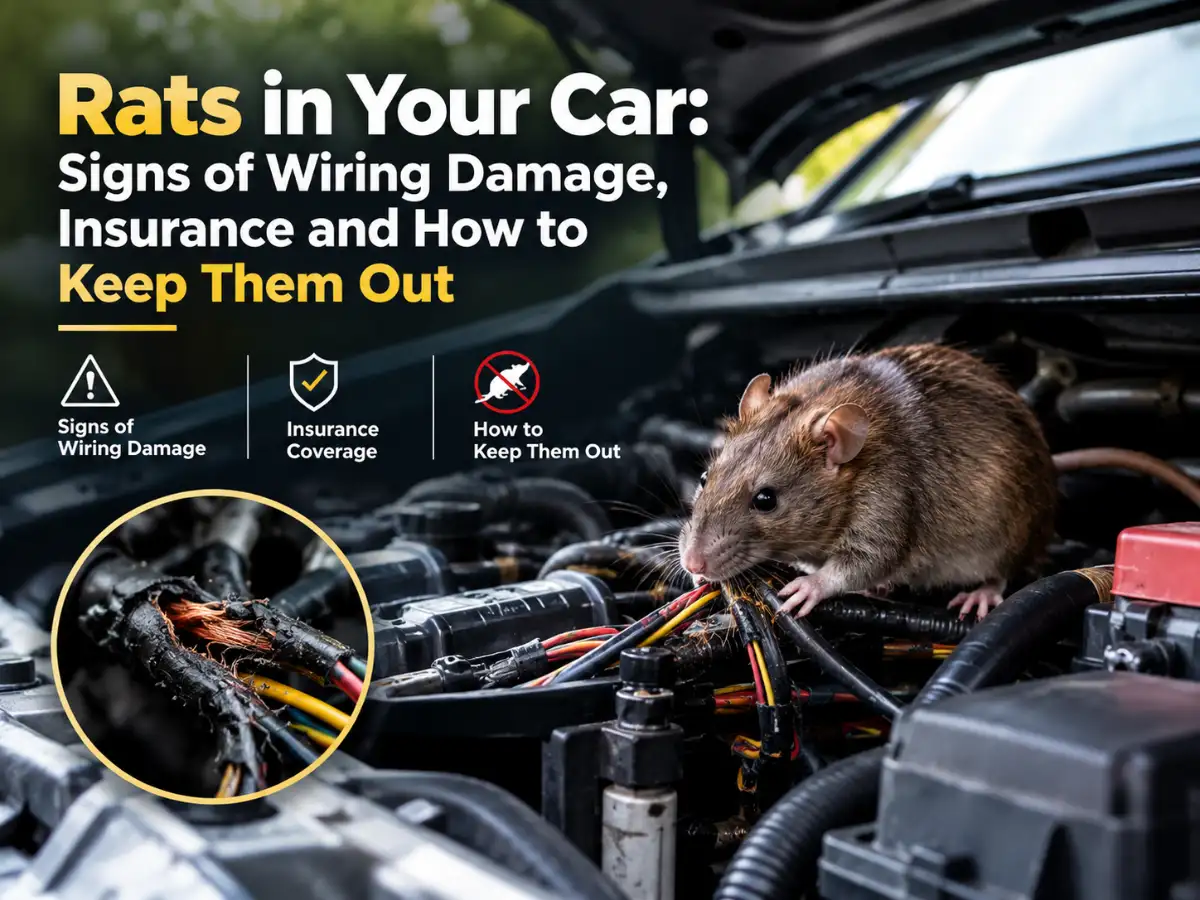
You come down to the parking on a Monday morning. The car starts, coughs, and throws a check-engine light. Or the headlights work on one side only. Or, worst, there’s a faint smell of petrol. Open the bonnet and you find shredded insulation foam, a few dark droppings, and a nest of chewed paper behind the battery.
Rat damage is one of the most common unplanned repair bills for city car owners in India, and it’s almost entirely preventable. Here’s what attracts rats, how to spot damage early, what your insurance will and won’t pay for, and what actually keeps them out.
Frequently asked questions
What is the best rat repellent for a car?
No single product. Removing food from the cabin, moving the car regularly, meshing the air intake and wrapping exposed wiring in capsaicin-coated tape work better together than any spray or gadget.
Do ultrasonic rat repellents work in cars?
Results are mixed. Some owners see a short-term drop in activity, but rats often get used to the sound. Treat them as an extra, not your main defence.
Is rat bite damage covered under car insurance?
Not under third-party cover. Under comprehensive cover it depends on the insurer; many require a rodent add-on. Check your policy wording or call your insurer.
How do I know if a rat is living in my car?
Look for droppings, chewed foam under the bonnet, nest material near the battery or air filter, sudden electrical faults and a bad smell from the AC vents.
Can I drive my car after a rat chewed the wires?
No, if wiring, hoses or fuel lines are damaged. You risk further damage, a rejected claim and, with fuel lines, a fire. Get it inspected or towed.
Why do rats choose cars?
A recently driven car is warm, the engine bay is dark and sheltered, and food crumbs in the cabin add to the pull. Cars parked for days near drains or garbage are most at risk.
Do soy-based wires attract rats?
There’s no solid evidence. Studies found rodents chew soy and non-soy plastics alike. Rats chew because their teeth keep growing.
Are naphthalene balls safe to keep in a car?
Not in the cabin. They release fumes you’ll breathe in a closed car. Use mesh, tape and a clean interior instead.
How do I clean rat droppings from my car safely?
Wear gloves, spray droppings with disinfectant, wait five minutes, wipe with paper towels and disinfect again. Don’t vacuum or sweep dry droppings.
How do I get rid of the smell after a rat in my car?
Find and remove the source first, which may be a nest or a dead rat in the air intake. Then steam clean and sanitise the cabin; fragrance alone won’t fix it.