Yellow Headlights — Can They Be Restored or Do You Need New Ones?
When your headlights start turning yellow, hazy, or cloudy, it is usually not a sign that they have reached the end of their life. In most cases, what you are seeing is surface-level oxidation of polycarbonate plastic, not permanent damage to the headlight assembly itself.
At Royal Royce Detailing, we specialise in yellow headlight restoration services across Delhi, Mumbai, Bangalore, and Hyderabad, delivered entirely through a doorstep mobile setup. In most real-world cases, you rarely need new headlights unless there is internal moisture or structural damage, because proper restoration can safely bring back factory-level clarity at a fraction of replacement cost.
The real challenge is not whether headlights can be fixed, but whether the restoration is done with the correct process and protection so the clarity actually lasts and does not fade again within months.
Why Headlights Turn Yellow in the First Place
Modern headlights are made from polycarbonate plastic instead of glass. This material is lightweight and impact-resistant, but it is naturally porous and vulnerable to UV exposure over time.
To protect it, manufacturers apply a thin UV-resistant hard coat. As the vehicle ages, that coating breaks down due to sunlight, heat cycles, road grime, and chemical exposure. Once the layer fails, the plastic underneath begins to oxidise and turns yellow.

In simple terms, what you see is not dirt—it is degraded outer material reacting to environmental exposure.
Common causes include:
Continuous UV exposure from sunlight
Heat cycling from the headlight bulbs
Road film, tar, and airborne contaminants
Improper cleaning or abrasive washing methods
Age-related breakdown of factory UV coating
Once this layer begins to fail, light output drops significantly, directly impacting night-driving safety.
Restoration vs Replacement: What You Actually Need
Before deciding on anything, it is important to correctly diagnose the headlight condition. We always start here at Royal Royce Detailing because not every headlight should be treated the same way.
Condition of Headlight
Can It Be Restored?
Recommended Action
Yellowing or foggy surface
✓ Yes
Professional restoration
Rough or chalky outer layer
✓ Yes
Sanding + polishing + sealing
Dim or scattered night beams / dull output
✓ Yes
Full correction and UV protection
Moisture inside the lens
✗ No
Replacement required
Deep cracks or structural damage
✗ No
Replacement required
When restoration is the correct choice
If the damage is external—meaning yellowing, haze, or oxidation on the surface—restoration is not just possible, it is the most efficient solution. In these cases, the original headlight housing is still structurally sound.
Keeping your OEM headlights is often better than replacing them because factory units usually have better reflectors, tighter seals, and more accurate beam patterns than most aftermarket alternatives.
When replacement becomes necessary
There are rare situations where restoration will not solve the problem. If moisture is trapped inside the unit or the lens has deep internal fractures, the sealing integrity has already failed.
In such cases, even a perfect external restoration will not prevent recurring issues, and replacement becomes the only long-term fix.
The Hidden Problem with Quick DIY Fixes
Most DIY kits and quick retail solutions focus only on surface appearance. They may temporarily remove the yellow layer, but they do not address the deeper issue: the absence of UV protection afterwards.
The factory UV coating is already compromised by the time you notice yellowing. When you sand or chemically wipe the surface without proper re-sealing, you expose raw polycarbonate plastic.
That is where the real problem begins.
Without a professional-grade UV barrier, headlights often:
Start yellowing again within 6 to 18 months
Become uneven in clarity
Develop micro-scratches from weak coatings
Lose optical sharpness faster than before
This is why many car owners feel that restoration “doesn’t last,” when in reality the missing step is proper sealing.
How Royal Royce Detailing Restores Yellow Headlights Properly
At Royal Royce Detailing, we do not treat headlight restoration as a cosmetic wipe-down. We treat it as a controlled resurfacing and re-protection process designed to restore optical clarity and durability together.
Each step has a purpose, and skipping any of them compromises long-term results.
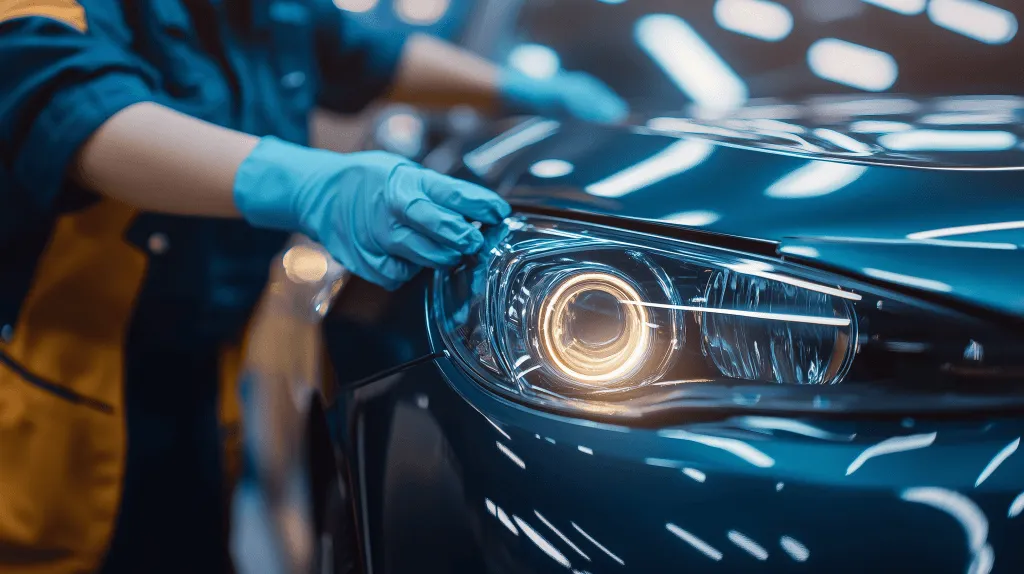
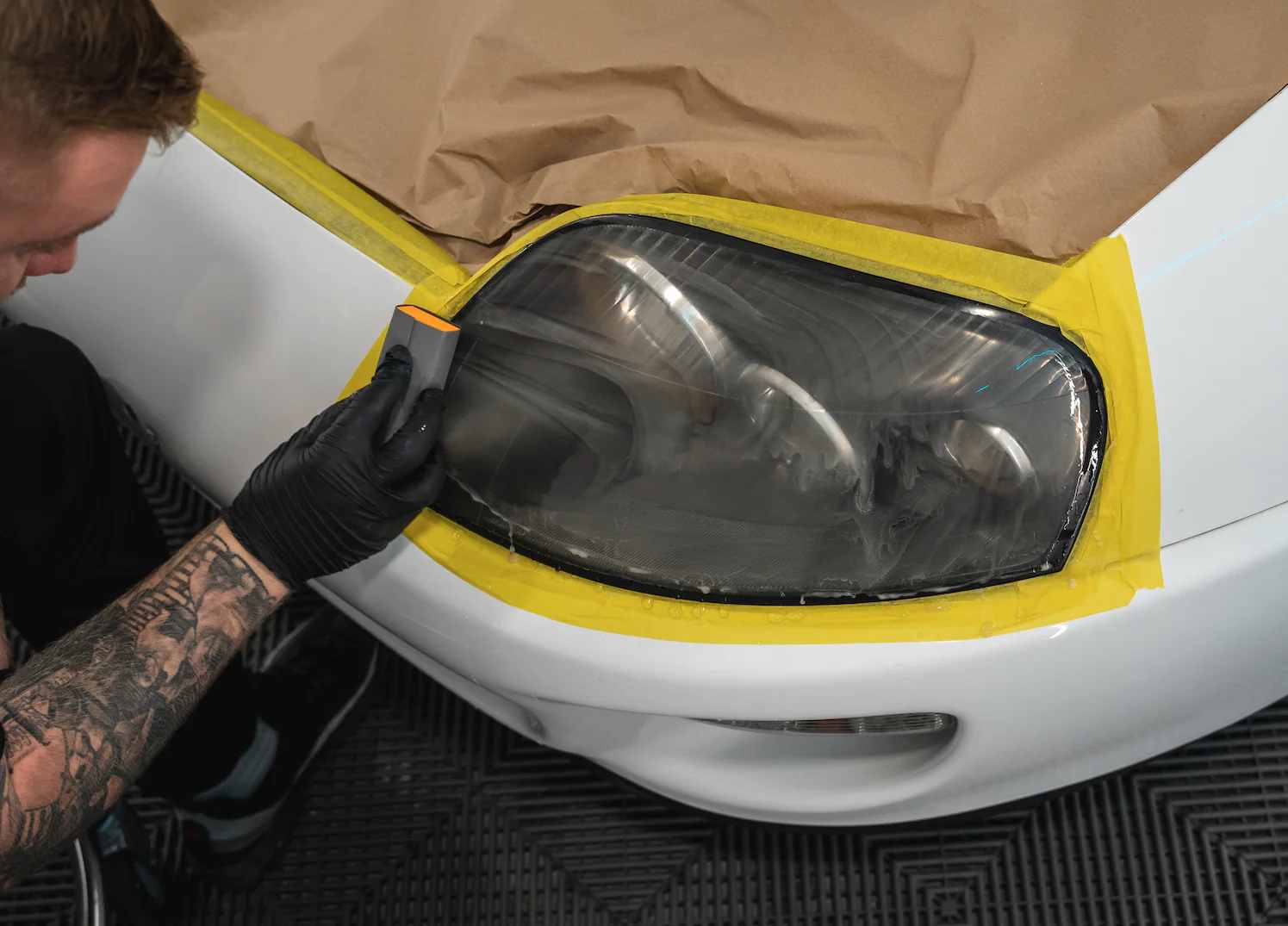
1. Surgical Preparation and Surface Protection
We begin by thoroughly cleaning the surrounding area to remove road film and contaminants. This ensures that no abrasive particles interfere with the restoration process.
Next, we apply high-grade automotive masking tape around the headlight edges. This protects your paintwork from accidental contact during sanding and polishing stages.
This step may look simple, but it is critical for precision and safety.
2. Deep Surface Decontamination
Before any correction begins, we eliminate embedded contaminants. This includes oils, tar residues, and microscopic debris that accumulate over time.
We use professional degreasing agents combined with a clay bar treatment to extract contaminants from the porous plastic surface.
This ensures the sanding process works on pure oxidation—not trapped grime.
3. Progressive Wet-Sanding for Oxidation Removal
This is the most technical stage of the process.
We perform controlled wet-sanding using a graded progression of abrasives, typically starting from heavier oxidation removal and refining step by step to ultra-fine finishing grits.
The goal is not to “scrub” the lens, but to level the damaged outer layer evenly until the oxidised plastic is fully removed.
When done correctly, this reveals a clean, uniform base ready for polishing.
4. Machine Polishing for Optical Clarity
After sanding, the surface will appear smooth but slightly dull. This is expected.
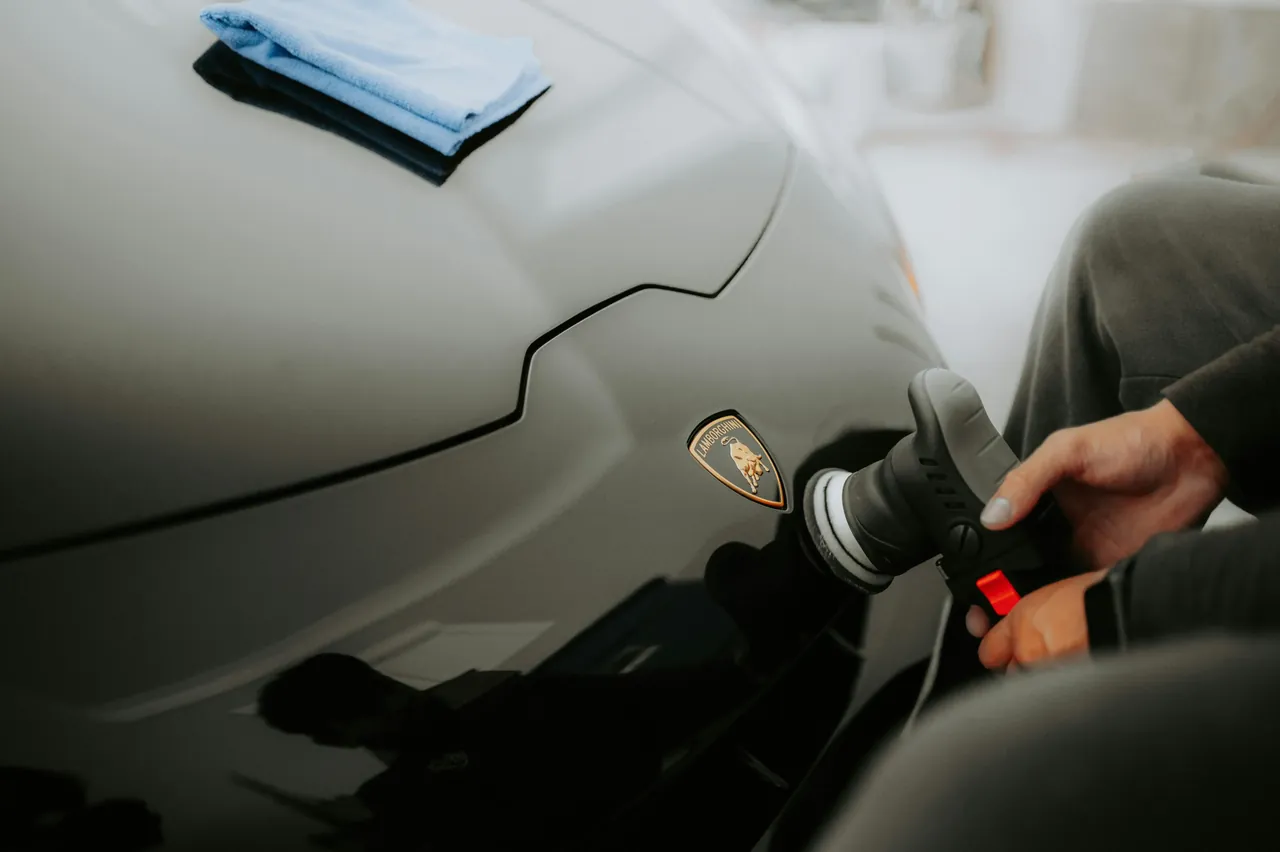
We then use a rotary polishing system with professional-grade compounds to refine the surface to full transparency. This step removes microscopic sanding marks and restores optical clarity.
At this stage, headlights typically return close to their original brightness and sharpness.
5. UV Protection with Ceramic Sealing
This final step is what determines how long the restoration lasts.
We apply a dedicated ceramic-based UV protective coating designed specifically for polycarbonate lenses. This creates a chemical bond with the surface, forming a durable barrier against sunlight and oxidation.
Without this step, headlights begin degrading quickly again. With it, clarity is significantly extended for years instead of months.

Why Restoration Is Almost Always Better Than Replacement
Replacing headlights may seem like a permanent solution, but in reality, it comes with trade-offs that many car owners do not anticipate.
Aftermarket units often suffer from:
Inconsistent beam alignment
Lower-quality plastic materials
Poor sealing against moisture
Faster yellowing compared to OEM units
Restoration, when done professionally, preserves your original factory assembly while restoring performance and appearance.
It is not just about saving money—it is about maintaining engineering quality.
How Long Does Headlight Restoration Last?
The longevity depends entirely on whether the lens is properly resealed after correction.
DIY or quick fixes: 3 to 6 months
Basic detailing shop restoration: 6 to 18 months
Professional ceramic-sealed restoration: multiple years of clarity
At Royal Royce Detailing, the difference lies in the final UV sealing stage. Without it, oxidation returns quickly. With it, the lens is actively protected against environmental breakdown.
Doorstep Service for Complete Convenience
We understand that not every car owner has the time to visit a detailing studio or wait around for hours while the work is being done. That is exactly why Royal Royce Detailing offers a fully equipped doorstep service designed to bring professional restoration directly to you.
We currently provide our mobile headlight restoration service across Delhi, Mumbai, Bangalore, and Hyderabad, ensuring that you can get expert-level results without leaving your home or office. Our team arrives with all necessary tools, compounds, and UV protection systems, so the process is completed on-site with the same precision you would expect from a dedicated detailing studio.
You do not need to drop your vehicle off or adjust your schedule around us. The entire restoration is carried out while your car remains parked at your location, allowing you to continue your work or daily routine without interruption.
This approach makes professional headlight restoration not just effective, but genuinely hassle-free—delivering clarity, safety, and convenience in a single service experience.
Final Thoughts: Restore First, Replace Only When Necessary
In most cases, yellow headlights are not a replacement problem—they are a restoration problem. The plastic has simply aged on the surface, while the structure underneath remains perfectly usable.
At Royal Royce Detailing, we focus on restoring that original clarity with precision processes that go far beyond quick cosmetic fixes.
Before you spend heavily on aftermarket replacements or live with reduced night visibility, it is worth getting a proper inspection. If your headlights are restorable, we can bring them back to near-factory clarity and protect them for long-term performance.
If there is no internal damage, restoration is not just possible—it is the smarter choice.
And with our doorstep service, it becomes the easiest one as well.
FAQ: Yellow Headlight Restoration
Can headlight restoration affect the original headlight seal or waterproofing?
No, when done professionally, restoration only works on the outer lens surface and does not open or disturb the internal sealing. The waterproof factory bond remains untouched throughout the process.
Why do some headlights turn yellow again even after being restored?
This usually happens when the lens is polished but not properly UV-protected afterwards. Without a strong UV coating, the plastic is exposed again and begins oxidising faster over time.
Is restoration safe for LED or projector headlights?
Yes, restoration is safe for all modern headlight types, including LED, HID, and projector units. The process is external and does not interfere with internal lighting components or electronics.
How long does the restoration process usually take on-site?
Most standard headlight restorations are completed within a short service window during a single visit. The exact time depends on the level of oxidation and surface condition.
Will restoration improve night driving visibility or only appearance?
It improves both. By removing haze and restoring light clarity, the beam output becomes sharper and more focused, which directly improves night driving safety and visibility.